Homebuyer Red Flag Inspector Get the guide · $29

For U.S. buyers considering an existing or older home

Know What to Investigate Before You Buy That House

A practical field guide to 100 warning signs, questions worth asking, and printable worksheets for evaluating inspection findings and repair costs.

  • Instant download
  • 270 pages
  • 14 worksheets
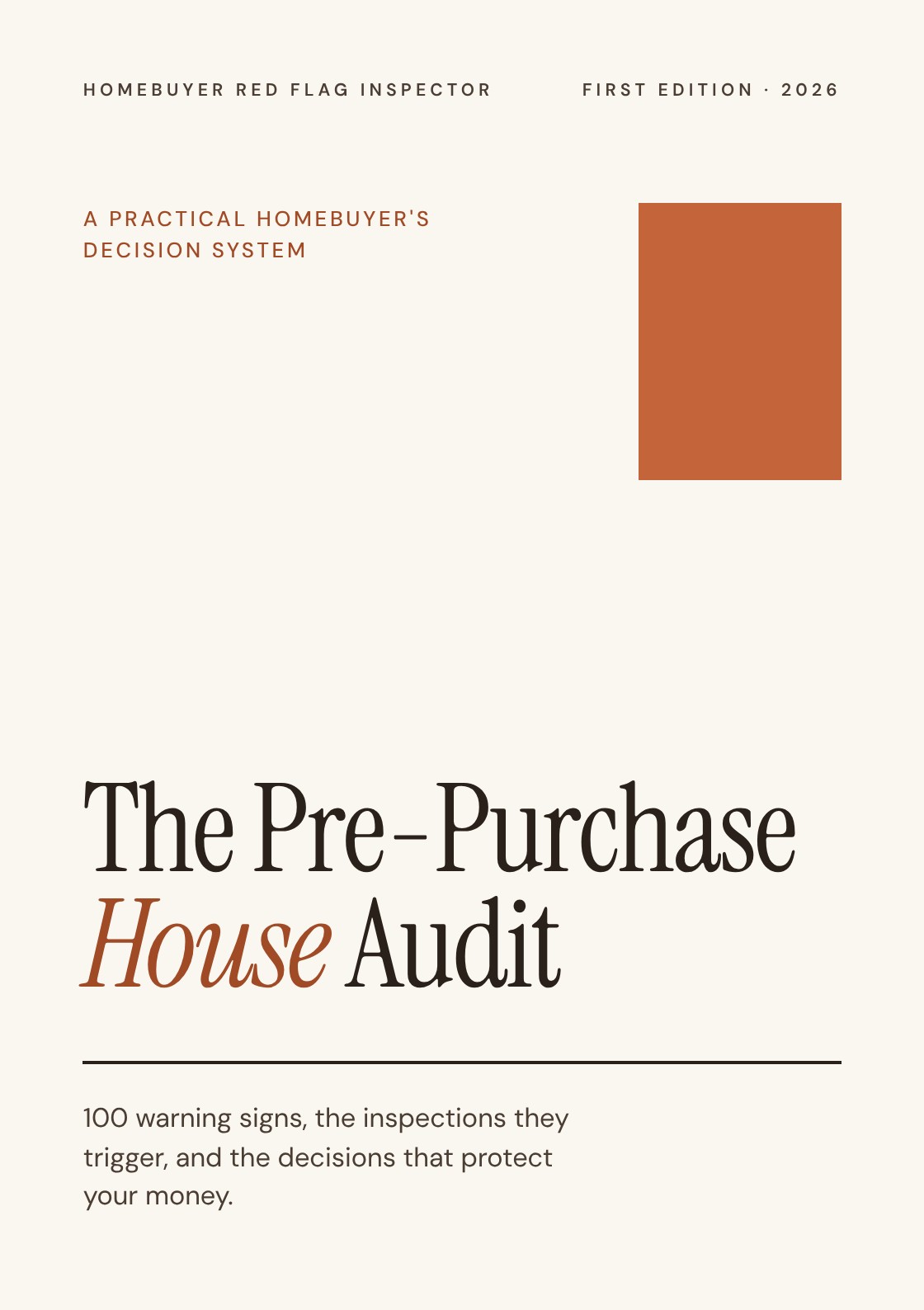
The Pre-Purchase House Audit
270pages
14worksheets

Inside the book

270 pages. Every one designed to be used.

The Pre-Purchase House Audit

Get the book

The Pre-Purchase House Audit

One practical reference for deciding what to document, which questions to ask next, and how to think about repair exposure before you commit.

$29$71−59%

What you get

  • 270-page PDF · A5
  • 14 printable worksheets
  • 100 numbered warning-sign entries, with alternative explanations, questions and safe next actions.
  • A step-by-step method for organizing evidence, specialist opinions and unresolved risks.
  • Specific questions for sellers, home inspectors, contractors and relevant specialists.
  • Six clearly labeled illustrative cases following real-world kinds of purchase decisions.
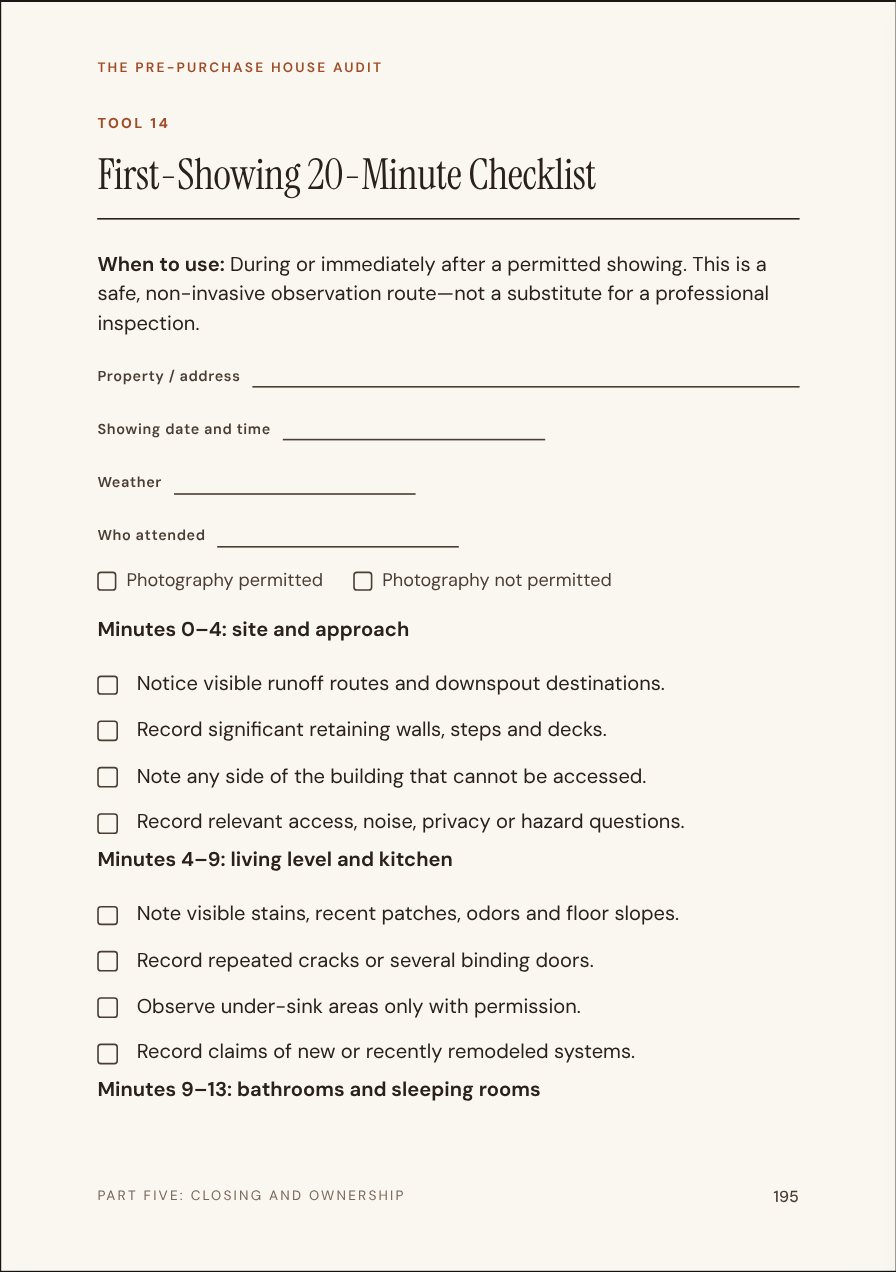
  • A showing checklist, inspection action tracker, repair quote comparison and final decision worksheets, all within the book.
Get the guide
  • Secure checkout by Gumroad
  • Instant download

Sound familiar?

You love the house. Some questions still need answers.

An attractive showing and a long inspection report can leave you with the same problem: you are not sure which findings matter, what remains uninspected, or what to do before your deadline.

  1. 01

    You receive a long inspection report, but cannot easily separate routine maintenance from conditions that need a specialist.

  2. 02

    The roof, sewer line or foundation raises a question, and you do not know what the next appropriate evaluation should be.

  3. 03

    A repair sounds manageable until different contractors describe different work, exclusions and costs.

  4. 04

    The seller says a past leak was fixed, but the records do not make clear what was repaired or what remains unseen.

  5. 05

    You are waiting for answers while the inspection deadline gets closer.

  6. 06

    You want to buy with confidence without dismissing real concerns—or treating every small imperfection like a disaster.

What changes

From red flags to a useful next step

A system you can use while touring homes, preparing for inspections, or reading a report—not a promise that every hidden defect can be found.

  1. 01Day 1

    Walk a showing with a plan

    Use the safe, non-invasive first-showing checklist to capture locations, photographs and questions without trying to inspect the house yourself.

  2. 02Day 1

    Ask more precise inspection questions

    Use the numbered warning-sign guide to clarify what you noticed, what else might explain it and who is qualified to evaluate it.

  3. 03Week 1

    Organize a long inspection report

    Turn observations, inaccessible areas and referrals into a written action tracker with evidence to request and deadlines to watch.

  4. 04

    Compare repair proposals on the same basis

    Separate the diagnosed problem, included work, exclusions and likely restoration needs instead of comparing headline totals alone.

  5. 05

    Protect your post-closing cash plan

    Keep confirmed repairs, future replacement reserves, optional upgrades and genuinely unpriced unknowns in separate budget categories.

  6. 06

    Make a purchase decision you can explain

    Use safety, financing, insurance, affordable work and unresolved risks as decision gates, with your own contract professionals advising on available options.

How it works

Use it at the point you are in the purchase

  1. PDF
    01

    Start with your next decision

    Follow the quick-start route for a showing, an accepted offer or an inspection report.

  2. 02

    Record observations and missing evidence

    Use the 100-check guide and issue tracker to ask focused questions without diagnosing defects from appearances.

  3. 03

    Evaluate the answer and the cost

    Seek qualified findings where warranted, compare written scopes, and work through the financial decision worksheets.

What’s inside

Everything in the book

The complete buying process, from the first showing through closing, with the numbered field guide at its center.

  • 270pages
  • 20chapters
  • 14worksheets
  • 3hreading time
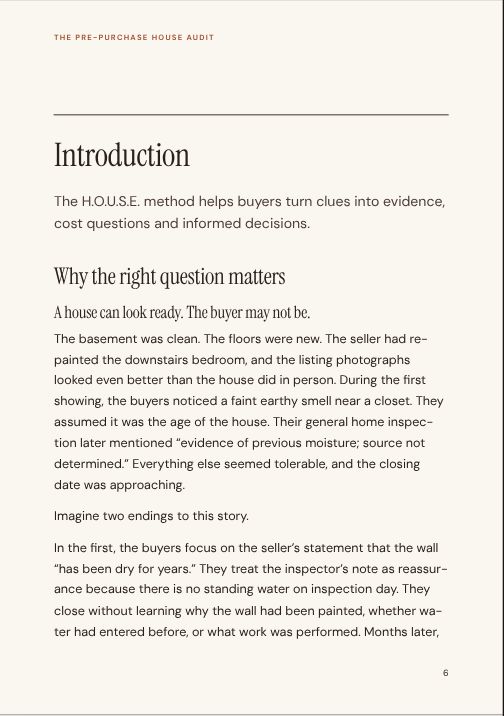
  1. IntroductionThe H.O.U.S.E. method helps buyers turn clues into evidence, cost questions and informed decisions.5 sections
    • Why the right question matters
    • The H.O.U.S.E. method
    • Prioritize and choose your path
    • Use your limited time
    • Practice and understand limits
  2. Part One: Before you offer
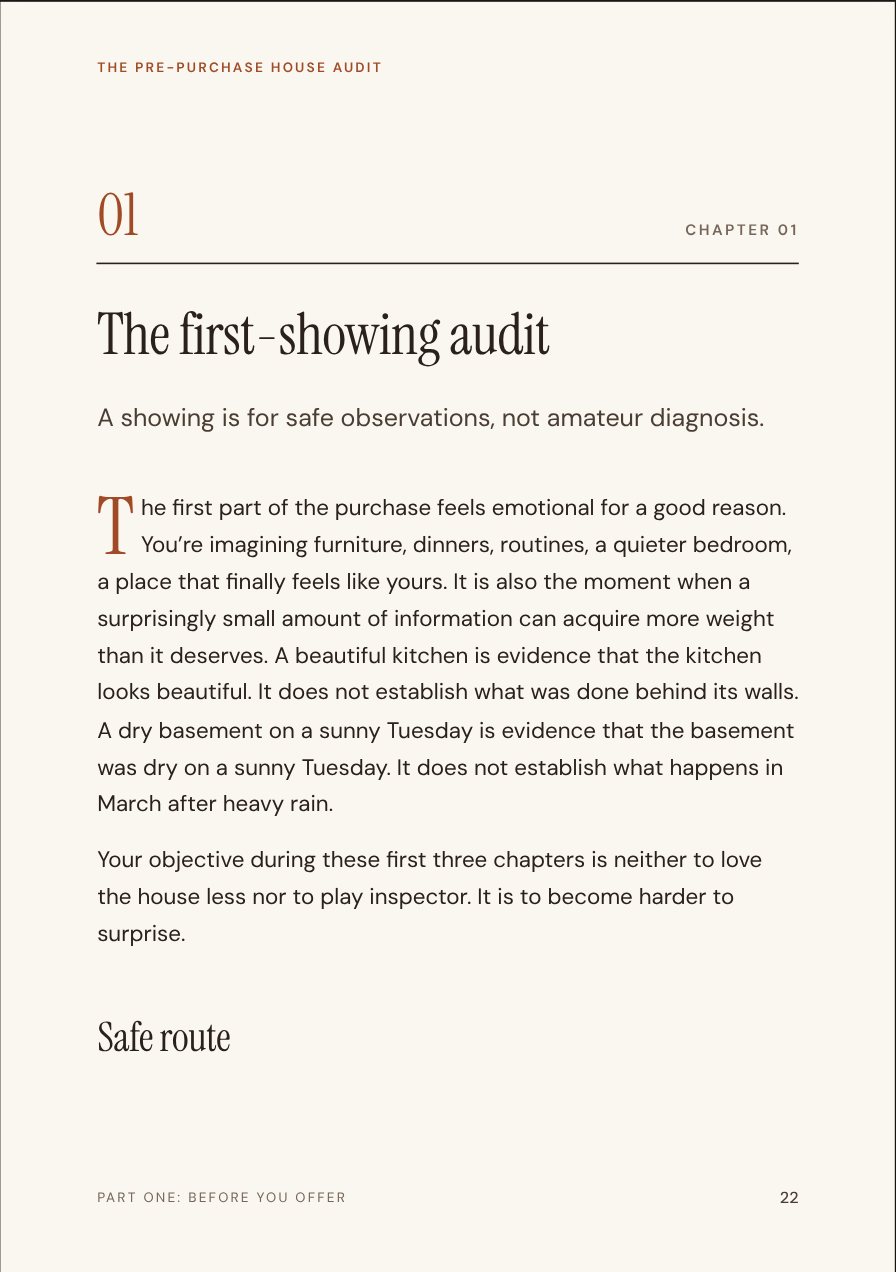
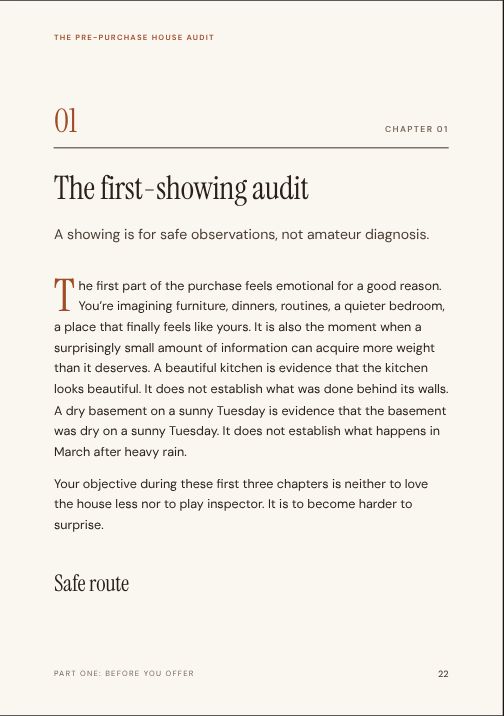
  3. 01The first-showing auditA showing is for safe observations, not amateur diagnosis.3 sections
    • Safe route
    • Document the questions
    • Practice after the showing
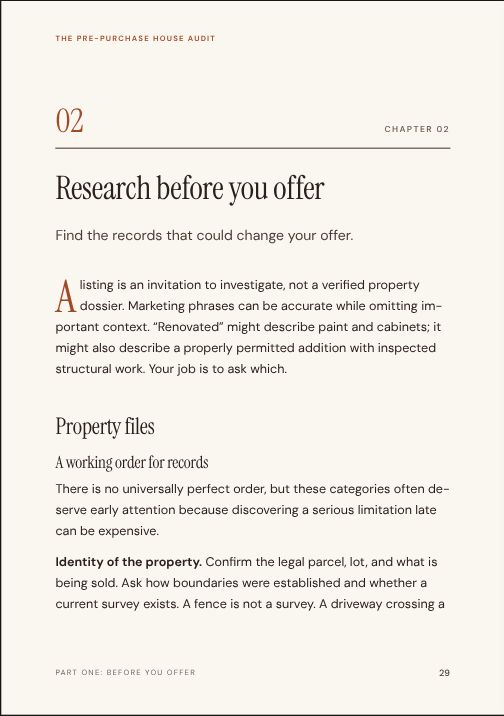
  4. 02Research before you offerFind the records that could change your offer.3 sections
    • Property files
    • Collect reliable records
    • Resolve key conflicts
  5. 03Age, construction era and geographyUse age and location as prompts for informed investigation.3 sections
    • Earlier construction
    • Later construction and place
    • An age-adjusted decision
  6. Part Two: The 100 warning signs
  7. 04Site, drainage and exteriorUnderstand how the land and exterior shed water.4 sections
    • Grade and surface runoff
    • Soil, walls and vegetation
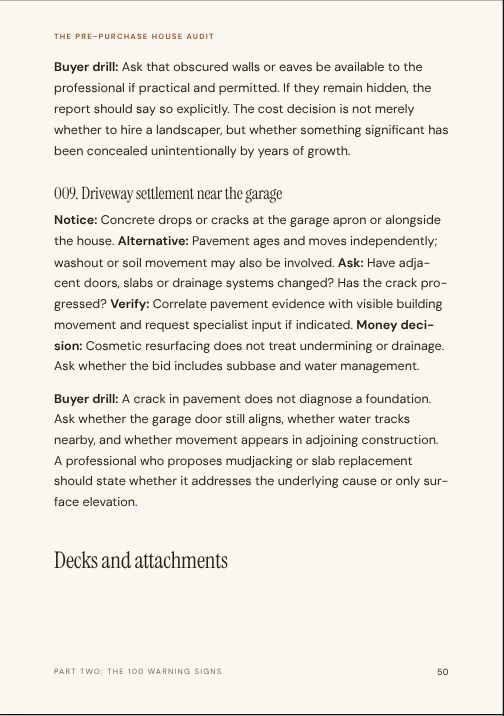
    • Decks and attachments
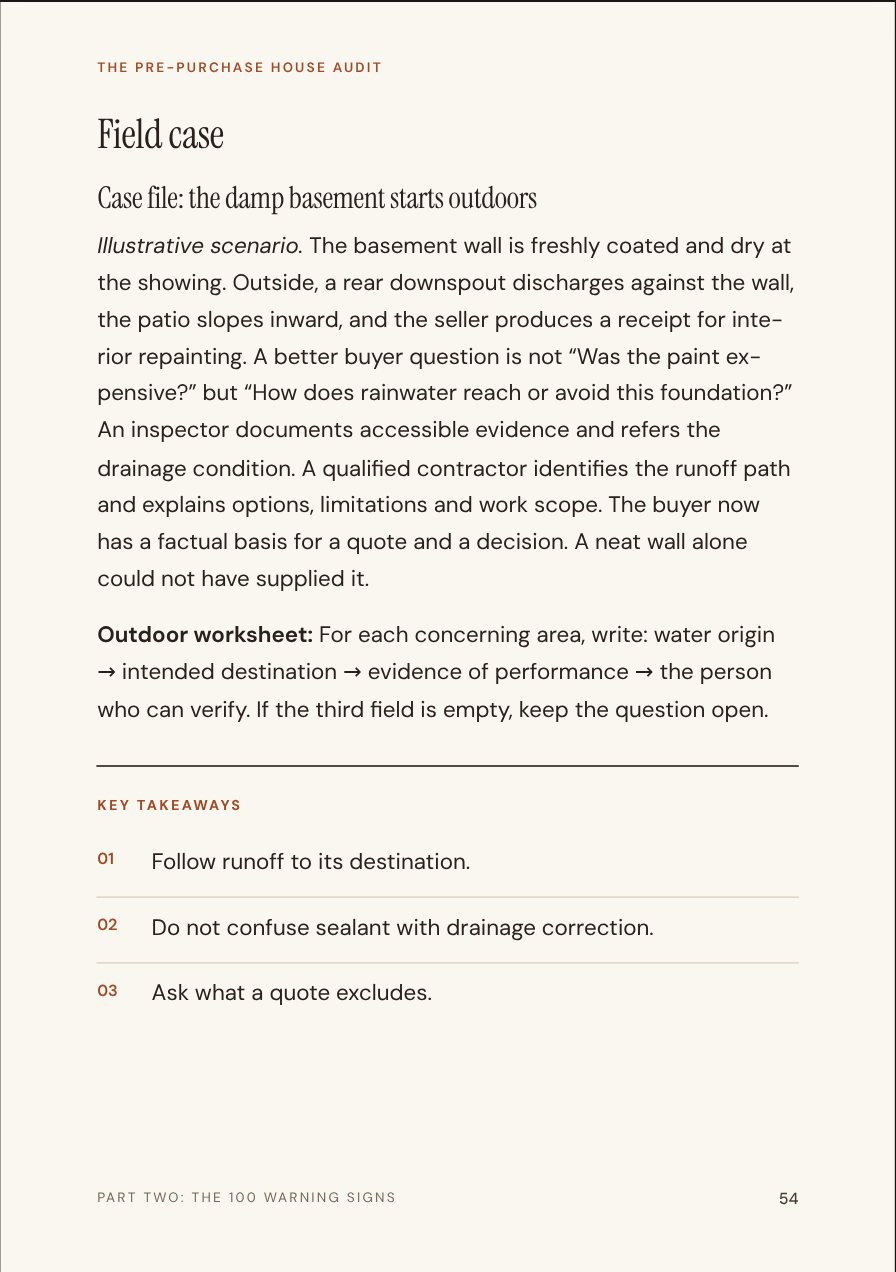
    • Field case
  8. 05Structure and foundationRecognize movement clues without guessing their cause.4 sections
    • Foundation cracks
    • Floors and openings
    • Framing and supports
    • Field case
  9. 06Roof, attic and ventilationEvaluate the roof assembly beyond its stated age.4 sections
    • Roof covering and flashing
    • Attic materials
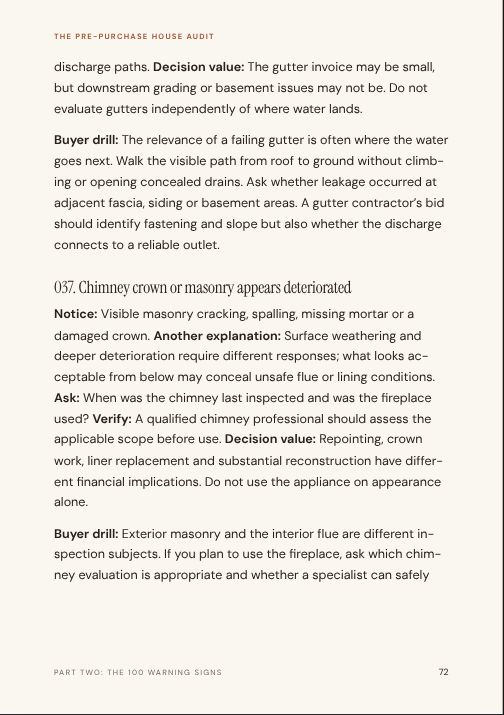
    • Chimneys and runoff
    • Field case
  10. 07Moisture and water intrusionSeparate moisture evidence from diagnosis and recurrence.4 sections
    • First moisture clues
    • Water pathways
    • Damaged materials
    • Cases and recurrence
  11. 08Electrical systemsAsk better electrical questions without dangerous testing.4 sections
    • Wiring and protection
    • Devices and cords
    • Panels and water
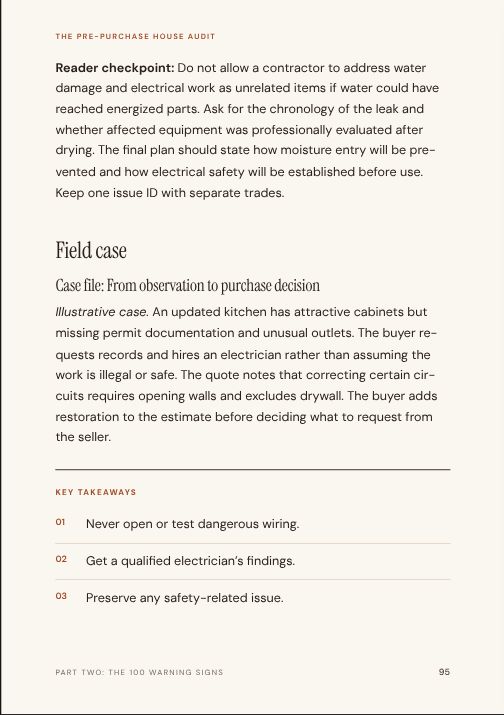
    • Field case
  12. 09Plumbing and sewerDistinguish visible plumbing from buried sewer conditions.4 sections
    • Drains and backups
    • Pipes and fixtures
    • Water heater and sewer
    • Field case
  13. 10Heating, cooling and combustionTreat equipment operation as one narrow piece of evidence.4 sections
    • Service and safety
    • Comfort and operation
    • Ducts and future work
    • Field case
  14. 11Interiors and renovation qualityLook beyond new finishes to documented renovation work.3 sections
    • Windows, flooring, showers
    • Records and renovations
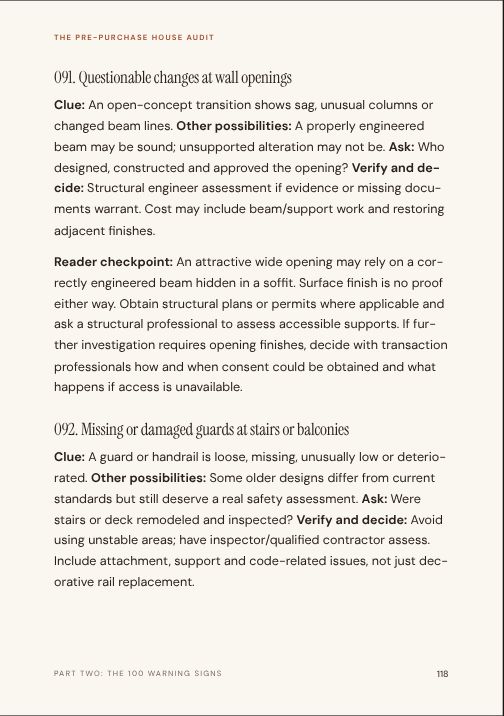
    • Altered openings
  15. 12Environmental and special property risksUse testing and specialists for hazards you cannot see.4 sections
    • Invisible environmental risks
    • Private systems and hazards
    • Case studies
    • Decisions and insurance
  16. Part Three: Inspection intelligence
  17. 13Hire and prepare for the inspectionSelect an independent inspector and understand the scope.3 sections
    • Choose well
    • Prepare a useful packet
    • Put the report to work
  18. 14Know when to call specialistsMatch specialty investigations to specific unanswered questions.4 sections
    • Select specialists
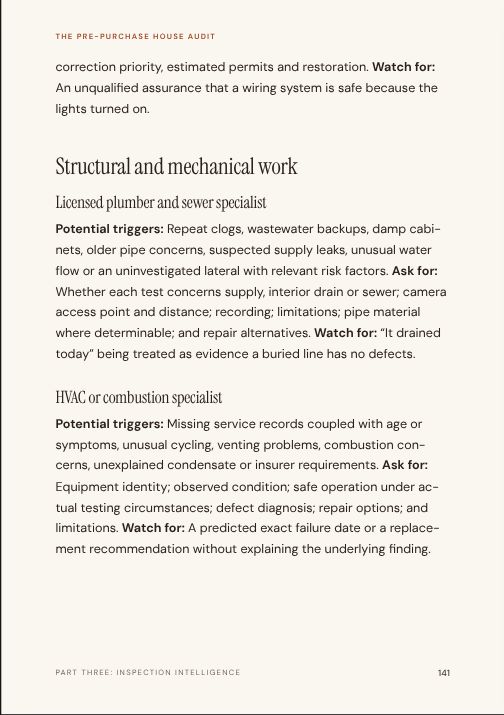
    • Structural and mechanical work
    • Environmental and property experts
    • Compare evaluations
  19. 15Read the report and manage unknownsTurn report findings into prioritized actions and deadlines.4 sections
    • Understand the report
    • Act on findings
    • Resolve disagreement
    • Protect the decision
  20. Part Four: The financial decision
  21. 16Size the financial exposureSeparate real quotes, reserves, upgrades and unknowns.4 sections
    • Sort financial exposure
    • Estimate true project scope
    • Reserves and ownership cost
    • Buyer exercise
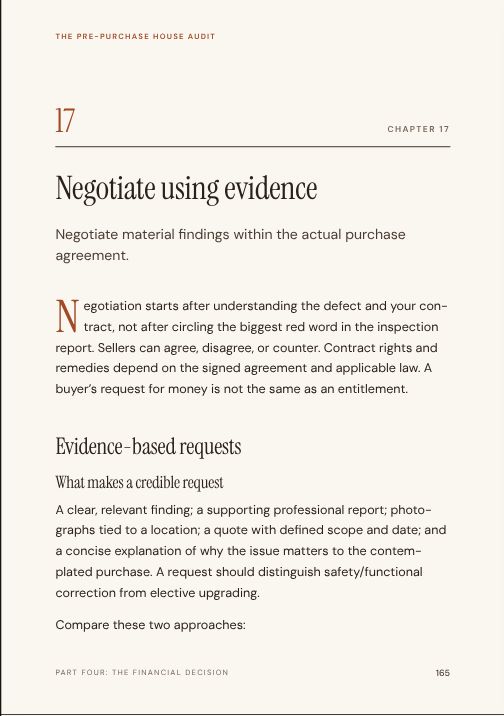
  22. 17Negotiate using evidenceNegotiate material findings within the actual purchase agreement.4 sections
    • Evidence-based requests
    • Repair versus financial adjustment
    • Deadlines and scripts
    • If the seller refuses
  23. 18Make a decision you can defendDecide using safety, coverage, finances and risk tolerance.3 sections
    • Define the real decision
    • Evaluate unresolved issues
    • Write the purchase memo
  24. Part Five: Closing and ownership
  25. 19The final walk-throughCompare the property’s final condition with agreed work.4 sections
    • The scope of the walk-through
    • Compare condition and repairs
    • Handle incomplete work
    • Handoff documents
  26. 20Your first-year risk planPrioritize safety, maintenance and reserves during year one.4 sections
    • Prioritize first-year tasks
    • First 90 days
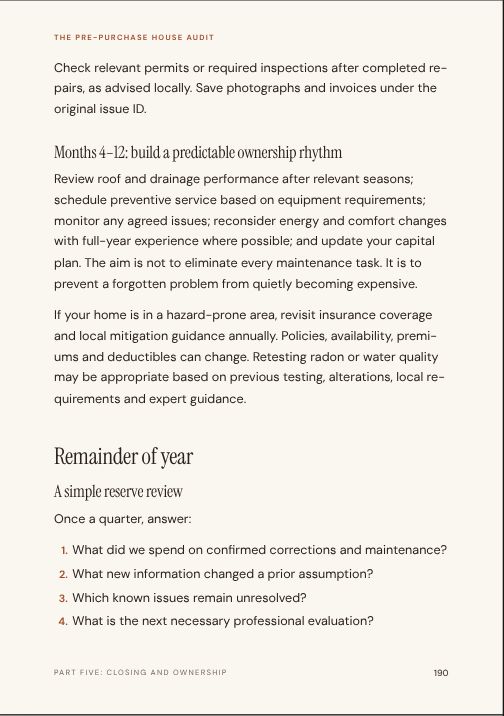
    • Remainder of year
    • Create an enduring record
  27. AAppendix Buyer’s field toolkit
  28. BAppendix Buyer decision casebook6 sections
    • Case 1: The beautiful basement with one freshly painted wall
    • Case 2: The kitchen renovation that looked like a dream
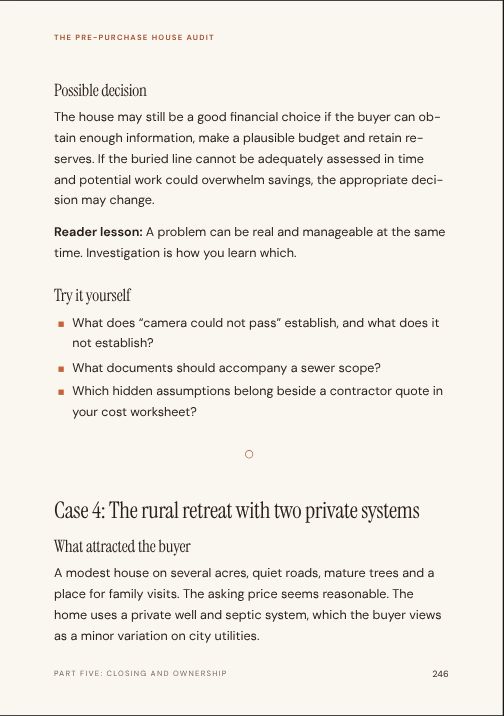
    • Case 3: The inexpensive 1950s home with the “minor plumbing issue”
    • Case 4: The rural retreat with two private systems
    • Case 5: The picture-perfect home with unexpectedly expensive insurance
    • Case 6: The contradiction between three contractor opinions
  29. CAppendix References and limitations4 sections
    • Before using any technical rule
    • Verified reference links
    • What citations can and cannot establish
    • Professional reliance and limits
  30. Glossary

Look inside

See the real pages

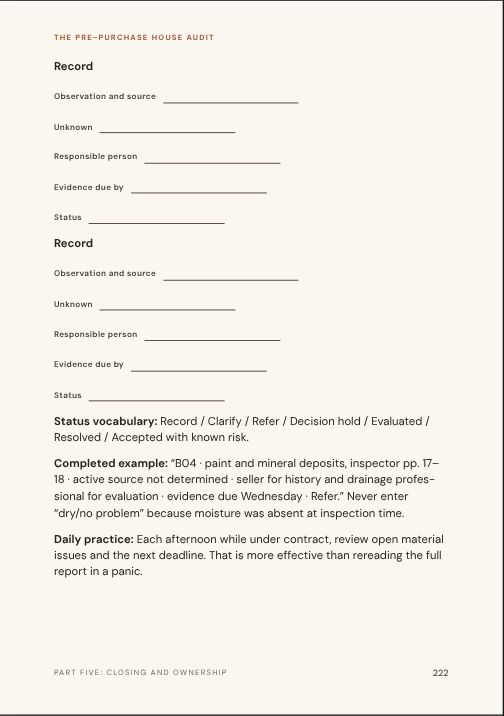
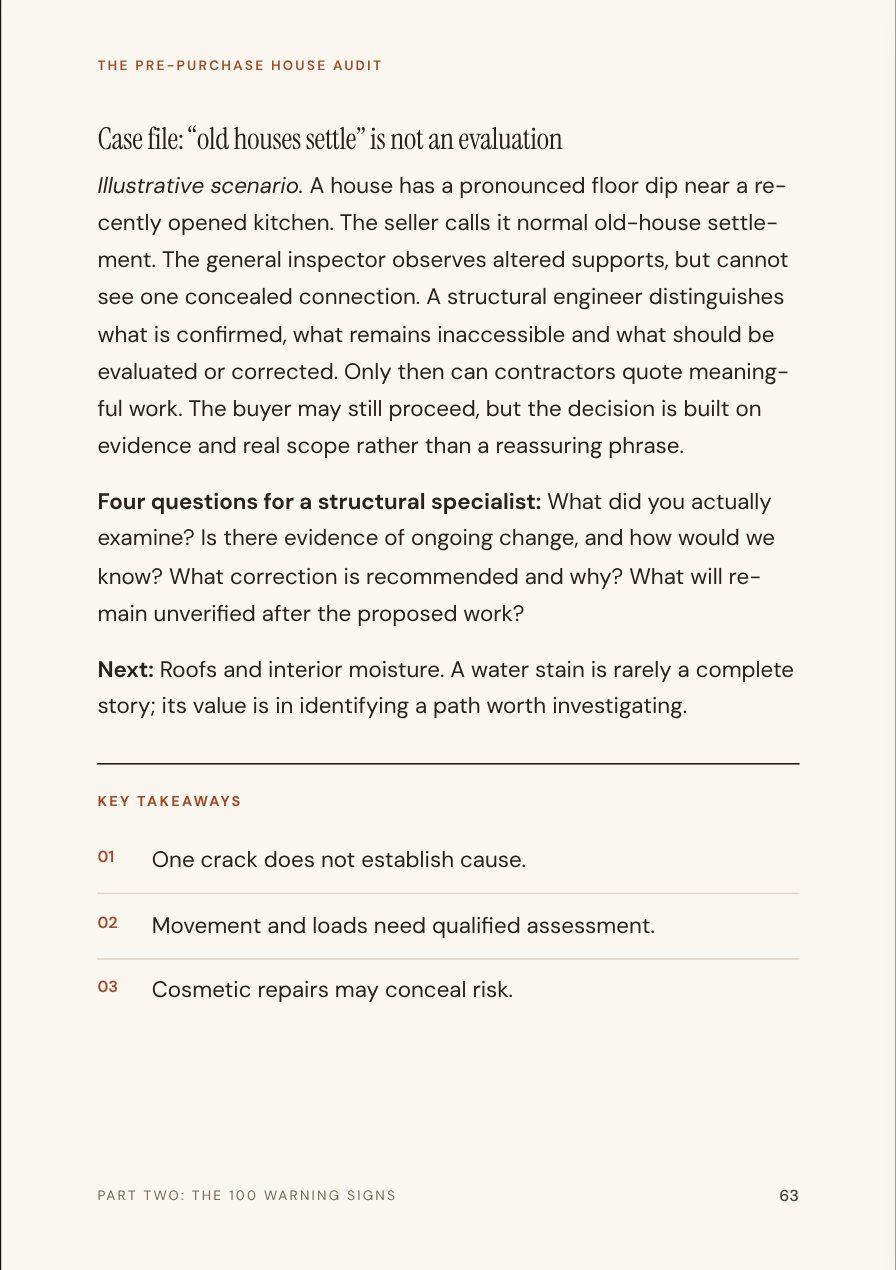
Look inside the chapters and practical worksheets before deciding whether the book fits your situation.

A note from Homebuyer Red Flag Inspector

Why this guide exists

The part of buying a home that concerns me most is not the sight of an old roof, a cracked finish or an uneven floor. It is the moment a reasonable question becomes a rushed guess.

A seller may say a leak was repaired. An inspector may report staining but be unable to determine its source. A contractor may recommend work that another contractor prices differently. All of that can happen while the purchase deadline is approaching.

I wanted one practical place where a buyer could slow the decision, even when the transaction itself is moving quickly.

That is the purpose of The Pre-Purchase House Audit.

It does not ask you to become a home inspector. It shows you how to record what you notice, recognize alternative explanations, ask the next useful question, seek the right qualified evaluation, and connect what you learn to the money and uncertainty involved.

A house does not need to be perfect to be worth buying. At the same time, a freshly painted wall or a reassuring sentence is not the same thing as a documented repair. The difference is evidence.

Inside, you will find 100 specific warning-sign entries, real questions to bring to professionals, six clearly identified teaching scenarios, and worksheets meant to be used during an actual purchase.

I cannot promise that following a guide will uncover every hidden problem or eliminate future maintenance. I can give you a calmer framework for asking what is known, what remains unknown, and what your next reasonable step should be.

HR
Homebuyer Red Flag InspectorPractical U.S. homebuyer education

Is it for you?

Honest about who it’s for

This book is for you if…

  • First-time U.S. buyers who want a clear way to prepare for showings and home inspections.
  • Buyers considering existing or older houses who need to understand age-related questions and repair records.
  • Buyers under contract who need to organize inspection findings, qualified follow-ups and estimated financial exposure.
  • Repeat buyers who want printable tools for comparing properties and documenting decisions.

It’s not for you if…

  • Anyone looking for a do-it-yourself structural, electrical, environmental or home-safety inspection.
  • Anyone seeking a diagnosis of a particular property or a guarantee that no hidden defects exist.
  • Anyone needing personalized legal contract advice, binding repair quotes, or a substitute for local licensed professionals.

Questions

Questions, answered

Does this replace a licensed home inspection?
No. It is an educational companion to professional inspections, specialist evaluations and your own purchase decisions. It cannot verify concealed conditions or determine whether a particular house is safe.
Is this useful if I have not made an offer yet?
Yes. Start with the safe first-showing route and property-record questions. The guide also has sections for buyers already under contract or reviewing inspection reports.
Will it tell me exactly what a repair costs?
No. It helps you ask for comparable written local quotes, identify what work is excluded, and distinguish confirmed repair scopes from future reserves and unresolved costs. It does not substitute for property-specific professional estimates.
Does it only apply to very old homes?
No. It focuses on existing U.S. homes, with age-based guidance for different construction periods and practical questions that also apply to newer houses.
Are the worksheets really included?
Yes. Fourteen printable worksheets are included within the guide, along with the full 100-check observation reference and six illustrative buyer cases.
Can it extend an inspection deadline or tell me whether I can cancel?
No. Contract rights and deadlines vary by agreement and jurisdiction. Use the deadline tracker to organize questions, and consult an authorized local transaction professional about your actual options.
What format is the book?
A 270-page PDF, designed at A5. It reads comfortably on phones, tablets and computers, and prints cleanly at home.
How do I get it?
Right after checkout you’ll receive a download link by email (Gumroad). No account or app needed.
Can I read it on my phone or e-reader?
Yes — any PDF reader works. It looks best on a tablet or computer; on small screens you can zoom in. Kindle and other e-readers open PDFs too, at a smaller size.
Can I print it?
Yes. Your copy is licensed for personal use: print it, write on it, keep it within reach.
The Pre-Purchase House Audit

Ready when you are

Make the next decision with clearer questions

Know what has been observed, what still needs a qualified opinion, and which costs or limitations you are choosing to accept.

  • Instant download
  • 270 pages
  • 14 worksheets
The Pre-Purchase House AuditInstant download
Get the book$29$71−59%